
Editor’s observe: first of two components; learn half two right here.
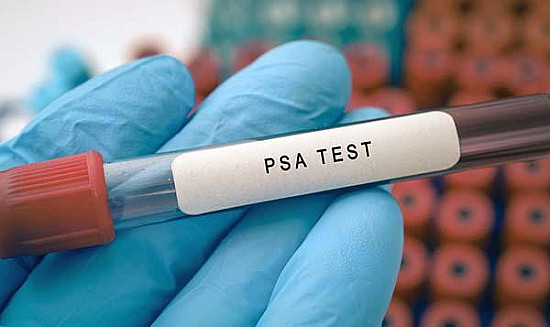
On this two-part collection, we’ll describe the PSA check — the way it’s used, and the way medical doctors carry out subsequent steps within the occasion of an irregular studying. Our first put up addresses PSA screening for prostate most cancers. Within the second a part of our collection, we’ll describe how medical doctors use the PSA check to verify the standing of a most cancers that’s being watched or handled.
PSA testing: Screening for prostate most cancers
All prostate cells make PSA, a protein that helps to dissolve semen in order that sperm cells can extra simply attain and fertilize an egg. Regular and cancerous cells within the prostate every make PSA in comparable quantities. However since most cancers cells are leakier, they launch extra of the protein into the bloodstream.
PSA screening for prostate most cancers got here into widespread use in the course of the early Nineties. However the check is controversial: prostate most cancers grows slowly, and the priority is that PSA screening flags too many low-grade tumors that may not be dangerous throughout a person’s life. Nonetheless, research do recommend that PSA testing, as a result of it could possibly detect cancers at early and extra treatable levels, might be lifesaving in some instances.
The US Preventive Providers Job Drive (USPSTF), an influential volunteer panel of consultants in prevention and evidence-based drugs, takes a cautious stance on the matter. The USPSTF advises medical doctors to debate the professionals and cons of PSA screening in males ages 55 to 69, but in addition cautions towards screening males over the age of 70, and provides no suggestion in any respect for males below 55.
Some professional teams suggest earlier screening for males in higher-risk teams. Black males, as an example, are about twice as more likely to be identified with and die from prostate most cancers than white males. The American Most cancers Society (ACS) advises PSA screening for Black males at age 45, and even earlier screening for males with first-degree kinfolk who developed prostate most cancers at younger ages, in addition to for males who check constructive for mutations in sure most cancers threat genes, comparable to BRCA1 and BRCA2.
Importantly, actions that put strain on the prostate gland (comparable to biking and intercourse) could cause PSA ranges in blood to spike, so you must chorus from these actions for 2 to 3 days previous to testing. Well being situations affecting the prostate, comparable to infections, irritation (prostatitis), or enlargement of the gland that happens usually in older males (benign prostatic hyperplasia), may also trigger PSA ranges to spike in methods which are unrelated to most cancers.
What’s an irregular PSA outcome?
Usually, PSA ranges over 4 nanograms per milliliter (ng/mL) in blood are thought-about irregular. However medical doctors may differ PSA cutoffs by age. For example, a PSA of three.5 ng/mL for a person in his 40s “is certainly irregular,” says Dr. Marc B. Garnick, the Gorman Brothers Professor of Drugs at Harvard Medical Faculty and Beth Israel Deaconess Medical Middle, and editor in chief of the Harvard Medical Faculty Information to Prostate Ailments. Nevertheless, a PSA of 5.5 ng/mL amongst males of their 60s, Dr. Garnick provides, is probably not. It’s finest to think about PSA values as being on a continuum, with larger ranges related to having prostate most cancers.
PSA testing can typically miss a most cancers analysis altogether. One research discovered that as much as 15% of males with PSA ranges below 4 ng/mL really did have prostate most cancers, and a sizeable fraction of those tumors have been clinically important. It’s additionally potential for high-grade most cancers to be current with out inflicting a big improve in PSA. That’s as a result of high-grade most cancers cells can lose their skill to truly make the protein.
What are subsequent steps after an irregular outcome?
It was once that elevated PSA readings have been adopted routinely by a prostate biopsy, after which therapy if most cancers was detected.
At present the paradigm is shifting. An irregular result’s now more likely to be adopted by a magnetic resonance imaging (MRI) scan, which may determine areas of the prostate gland that look suspicious for most cancers. In Europe and a few hospitals within the US, males with irregular PSA readings may keep away from an preliminary biopsy altogether if the MRI outcomes are detrimental. Nevertheless, many physicians will nonetheless go for an preliminary biopsy in such instances, adopted by periodic PSA exams and MRI scans to find out if additional biopsies are wanted.
If the preliminary biopsy and MRI outcomes are constructive, then medical doctors will carry out a focused biopsy centered on areas the place the MRI confirmed proof of most cancers. If a most cancers analysis is confirmed, then subsequent steps will probably be initiated. At present, many low-grade cancers are watched with energetic surveillance, and handled provided that follow-up biopsies and MRI scans present worsening of the illness. Increased-grade cancers will probably be handled instantly.
“The aim of this risk-adapted method to screening,” Dr. Garnick says, is to “determine clinically important cancers that really do want therapy whereas lowering diagnoses of clinically insignificant cancers that don’t.”
Variations on the PSA check
Reasonably than topic everybody with an elevated PSA studying to a biopsy, some medical doctors carry out extra exams that contain extra detailed interpretations of PSA ranges.
- Free PSA testing appears to be like for PSA that isn’t sure to different proteins. Low percentages of free PSA are related to larger most cancers threat.
- PSA density divides the whole PSA stage in ng/mL by the amount of the prostate gland in milliliters. A PSA density of 0.15 ng/mL or larger could also be related to prostate most cancers.
- PSA velocity tracks how briskly PSA ranges improve from check to check.
- Prostate Well being Index combines whole PSA, free PSA, and a kind of PSA referred to as proPSA. Some proof suggests it diagnoses prostate most cancers extra precisely than PSA by itself.
Within the subsequent a part of our collection, we’ll deal with how PSA is used as a check for monitoring and managing sufferers with prostate most cancers.
 jiujuxiaban